When a Pakistani believer hears the first beat of the dholak, something happens that no translation can explain. The room leans forward. Hands begin to clap. And within moments, a whole congregation is singing praise to Jesus Christ in the language of their mother — in Urdu, in Punjabi, in the heart language of millions.
Urdu Gospel songs — masihi geet — are not simply music. They are the memory of a people.
For generations, when Christian families in Pakistan had little else, they had their songs. Songs sung at weddings and funerals. Songs sung in brick kilns and village courtyards. Songs sung softly where singing loudly was not safe. This article is a guide to that heritage: where it came from, what makes it unique in all the world, and where you can find new Urdu worship songs today.
What Are Masihi Geet?
Masihi geet simply means “Christian songs” — the worship music of Urdu and Punjabi-speaking Christians. But the phrase carries far more than its translation. A masihi geet is usually:
- Sung in the heart language — Urdu or Punjabi, not borrowed English
- Built for congregation, not performance — everyone sings, and everyone can
- Rhythmic and participatory — clapping, dholak, tabla, harmonium, and often dance
- Scripture-saturated — many are direct settings of the Psalms or Gospel truths
Unlike much Western worship music, masihi geet were never designed for a stage. They were designed for a courtyard where fifty families gather, where nobody has a screen, and where the melody must be simple enough that a child learns it in one hearing and remembers it for sixty years.
The Zaboor: The Psalms That Pakistan Sings
No article on Urdu Gospel songs can begin anywhere but the Zaboor — the Psalms.
In the Pakistani church, the Psalms are not merely read; they are sung, and they have been for well over a century. The Punjabi metrical Psalms — versified so that ordinary believers could sing Scripture itself — became the backbone of worship for the entire Christian community of the Punjab. To this day, in villages where no worship band exists and no projector has ever been switched on, a congregation can sing the Zaboor for hours from memory.
This is one of the most remarkable facts about our church: a poor and persecuted community memorised the Psalms by singing them. No hymnal required. No electricity required. Just voices, a dholak, and the Word of God.
The Instruments of Urdu Worship
The sound of masihi geet is unmistakable, and it comes from instruments that belong to the soil:
- Dholak — the two-headed drum that sets the heartbeat of every geet
- Harmonium — the pumped keyboard that carries the melody
- Tabla — for the more classical, intricate rhythms
- Chimta and clapping — because worship here is never still
In recent years, keyboards, guitars and full studio production have joined the tradition. The best new Urdu Gospel songs do something beautiful: they keep the dholak and add the studio, so the geet sounds modern without losing its soul.


Seasons of Song
Urdu Gospel songs follow the Christian year, and each season has its own treasury:
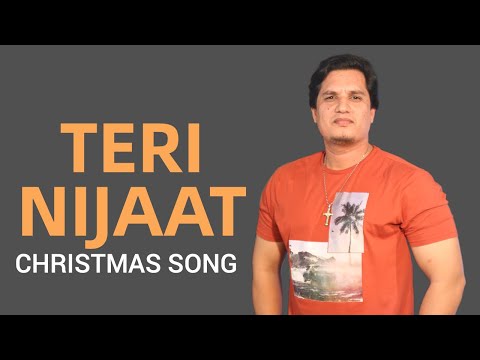
- Christmas (Bara Din) — the largest song season of all, when new Christmas geet are written and released every year and sung in homes, churches and streets
- Good Friday and Easter — songs of the Cross and the empty tomb, often the most emotionally powerful in the entire repertoire
- Weddings — a rich tradition of Christian wedding geet
- Testimony and comfort songs — sung in hospitals, in mourning, and in seasons of persecution
New Masihi Geet: A Generation Is Writing Again
For a time, many feared the tradition was fading — that young believers would sing only translated English worship and forget their own. That fear has proved wrong.
A new generation of Urdu Gospel singers and songwriters is rising, and they are writing fresh masihi geet: new melodies, new lyrics, new recordings — while keeping the language and the rhythm of their fathers. Social media, YouTube and mobile apps have done what no record label ever did for our community: they have given the village singer the same platform as the city studio.
You can read how that is happening in practice in Gospel Voice of Pakistan: How a New Generation of Urdu Gospel Singers Is Rising.
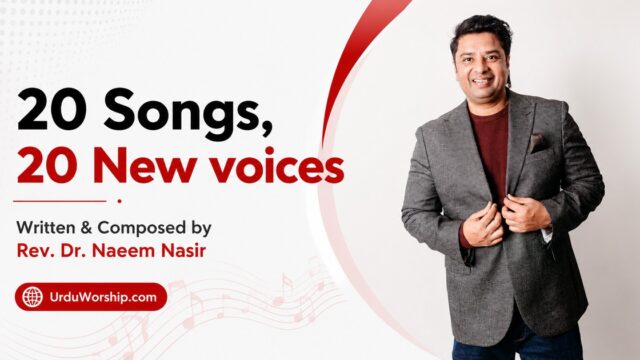
At Urdu Worship, we publish original Urdu Gospel songs written and composed for the church — new geet for a new generation, freely available to sing, to share, and to worship with. You can read the story of how these particular songs came to be written, beginning on a rooftop in Pakistan.
Listen to our songs — and subscribe to our YouTube channel for every new release.
Where to Find Urdu Gospel Songs Today
If you are looking for masihi geet — for your church, your family, or your own devotion — here is where to look:
- Urdu Worship — our own library of original Urdu Gospel songs and Christmas geet
- Our YouTube channel — where every new song is released with lyrics
- The Urdu Church App — the largest Urdu Christian app in the world, carrying Urdu worship songs and the Zaboor alongside the complete Urdu Bible, sermons and daily devotions, all free of cost. Search “Urdu Church” on the App Store or Google Play.
Why This Music Matters
There is a reason the enemy of our souls has never been able to silence the singing church of Pakistan.
Songs cross barriers that sermons cannot. A believer who cannot read still sings. A child too young for doctrine still learns the Gospel through a chorus. A family in a village with no pastor still worships, because they carry the songs inside them. And in places where a Bible cannot safely be seen, a melody can still be hummed.
Masihi geet are how the Pakistani church has carried the Gospel through poverty, persecution and time itself. Every new song written today joins that stream.
“O sing unto the LORD a new song: sing unto the LORD, all the earth.” — Psalm 96:1
Frequently Asked Questions
What does “masihi geet” mean?
Masihi geet means “Christian song” in Urdu — the worship songs of Urdu and Punjabi-speaking Christians, sung in churches, homes and gatherings across Pakistan and the diaspora.
What is the Zaboor?
Zaboor means the Psalms. In Pakistan, the Psalms are traditionally sung in metrical Punjabi and Urdu versions, and they form the foundation of congregational worship in most churches.
Where can I download Urdu Gospel songs?
You can listen to original Urdu Gospel songs at Urdu Worship and on our YouTube channel, and find Urdu worship songs and Zaboor free inside the Urdu Church App.
Can I use these songs in my church?
Yes — our songs are written for the church. Sing them freely in your services, gatherings and homes.